7 Most Common Reasons Your Garage Door Won't Close
A garage door that won't close isn't just an inconvenience; it's a security risk. Whether you're worried about break-ins or dealing with weather exposure, a malfunctioning garage door demands immediate attention.
The good news is that there is likely a common reason why your garage door isn't closing. Understanding whether you can tackle the issue yourself or need to contact a professional is very important for your safety and the integrity of your door. As garage door professionals, we have seen hundreds of cases of garage doors not closing properly. This guide breaks down the 7 most common causes we tend to see.
1. Obstructed or Dirty Safety Sensors
In the United States, residential garage doors with automatic door openers are required to have safety sensors to help prevent serious injury to people, pets, and vehicles. These door photoelectric sensors feature an infrared beam that runs across the doorway's opening and detects obstacles that may prevent the doors from closing. If your garage doors won't close but there is no apparent obstacle in the way, it could be due to dirt or debris on the sensor lens. You can also check for sensor misalignment or damaged wires.
How To Fix: Check for obstruction and clean the lens. Realign the sensors and inspect the sensor wiring.
When To Seek Professional Help: If troubleshooting attempts fail, the wiring could be damaged or a larger, more complex issue could be responsible. Professional diagnoses and repairs are required.
2. Misaligned or Damaged Tracks/Rollers
Uneven operation, loud grinding and scraping noises, and visible gaps between the tracks and rollers are clear indicators of a misaligned or damaged garage door track. When this happens, the garage door appears off-balance and wobbly. Some of the possible causes include collisions from vehicles or bicycles, worn-out components, and deformed or obstructed tracks.
How To Fix: Unless you have professional experience repairing tracks/rollers, you should NOT attempt to correct this issue on your own. Any mistakes can lead to severe injury.
When To Seek Professional Help: If you've identified that your garage door tracks/rollers are damaged, we highly recommend you seek professional help to avoid injury.
3. Dead Remote Batteries or Faulty Remotes
If your garage door won't close or open with a remote, the problem is likely due to expired batteries, signal interference, or the lock feature being engaged. Dead transmitter batteries can be easily fixed by a quick battery replacement, but an issue with signal interference may require further inspection.
How To Fix: Replace the remote batteries and inspect the buttons, then try using the remote from a short distance to check for signal issues. Inspect for other possible interference from electronic devices, like wireless routers and LED light bulbs.
When To Seek Professional Help: If none of the above steps work, it could be a problem with the mechanical system that requires an experienced repair technician's help.
4. Broken Springs or Cables
Natural wear and tear, corrosion, and poor maintenance are some of the leading causes of damaged garage door springs and cables. Loud, popping noises, or a garage door falling fast are clear signs of a broken spring or cable. You may also notice obvious gaps in the spring or cables, or the door looking crooked. A broken garage door spring or cable is extremely dangerous and requires immediate attention.
How To Fix: Broken springs or cables are dangerous to handle yourself. We recommend seeking professional help immediately.
When To Seek Professional Help: As soon as possible.
5. Incorrect Opener Settings
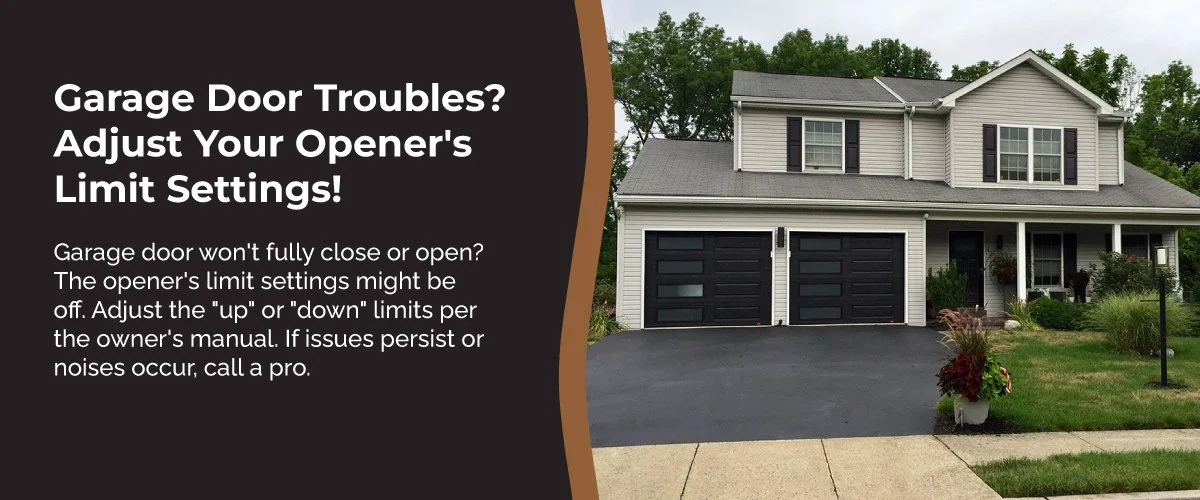
Limit settings are often the reason for a garage door that won't close all the way or stops midway when it starts to open. It's possible that the garage door opener's travel distance is incorrect.
Depending on the problem, an appropriate fix is necessary. If the door doesn't open completely, you need to increase the "up" limit. If it doesn't close fully, you must increase the "down" limit. If it closes before opening again, the "down" limit may need to be decreased.
How To Fix: Refer to the owner's manual, locate the limit settings and adjust them accordingly.
When To Seek Professional Help: If door operation remains inconsistent despite adjustments or if you hear unusual noises, schedule a repair.
6. Power Supply Issues
Power supply issues in your garage door could mean a loss of electricity in the door opener. Frequent causes include a faulty electrical outlet, a tripped circuit breaker or GFI outlet, or a blown fuse. An unresponsive opener is a good indicator that your garage door is experiencing power supply issues. You may also notice other signs, such as a faint humming sound without movement, stalling or reversing, and intermittent operation.
How To Fix: Check your home's electrical panel and reset the breaker for the garage door opener. Unplug the opener for about 30 seconds or test the outlet with a different device. Inspect for damaged wiring and ensure the disconnect switch is not enabled.
When To Seek Professional Help: If the issue persists or you see damaged wiring, this can pose a safety hazard. You should also call a professional if you notice a burning smell or visible signs of damage in the opener. You may also need to contact an electrician if the problem lies with your connection and not the garage door or opener.
7. Engaged Lock Mode
When your garage door "lock mode" is engaged, it means a safety switch or a physical lock has been activated. Sometimes, this happens inadvertently, like when you accidentally press the button too long. Fixing a garage door's lock button is simple, but it can vary depending on the type of lock. Older garage doors may have a physical slider lock, while some may have a knob or handle-type model. Modern systems may have built-in features that require resetting.
How To Fix: Locate the lock and turn or slide to disengage. Pull the emergency release cord if the door still won't open. Manually lift the door once disengaged.
When To Seek Professional Help: If you suspect an issue with the torsion springs or you're unable to pinpoint the problem, contact a professional.
Ensuring Garage Door Functionality With a Trusted Professional
Keeping your garage door in optimal working condition can be crucial to your safety. When it starts to malfunction, it's understandable to feel frustrated over security concerns, whether for a residential or a commercial property. Determining why your garage door won't close or open properly can be tricky. Working with a reputable garage door expert helps ensure precision garage door service, reliability and promptness.
Smoker Door Sales offers professional garage door repair services throughout Pennsylvania and the surrounding areas. Our team of experienced professionals can diagnose your garage door's problem and provide a free service quote. Contact us to schedule a service or learn more about our products today.